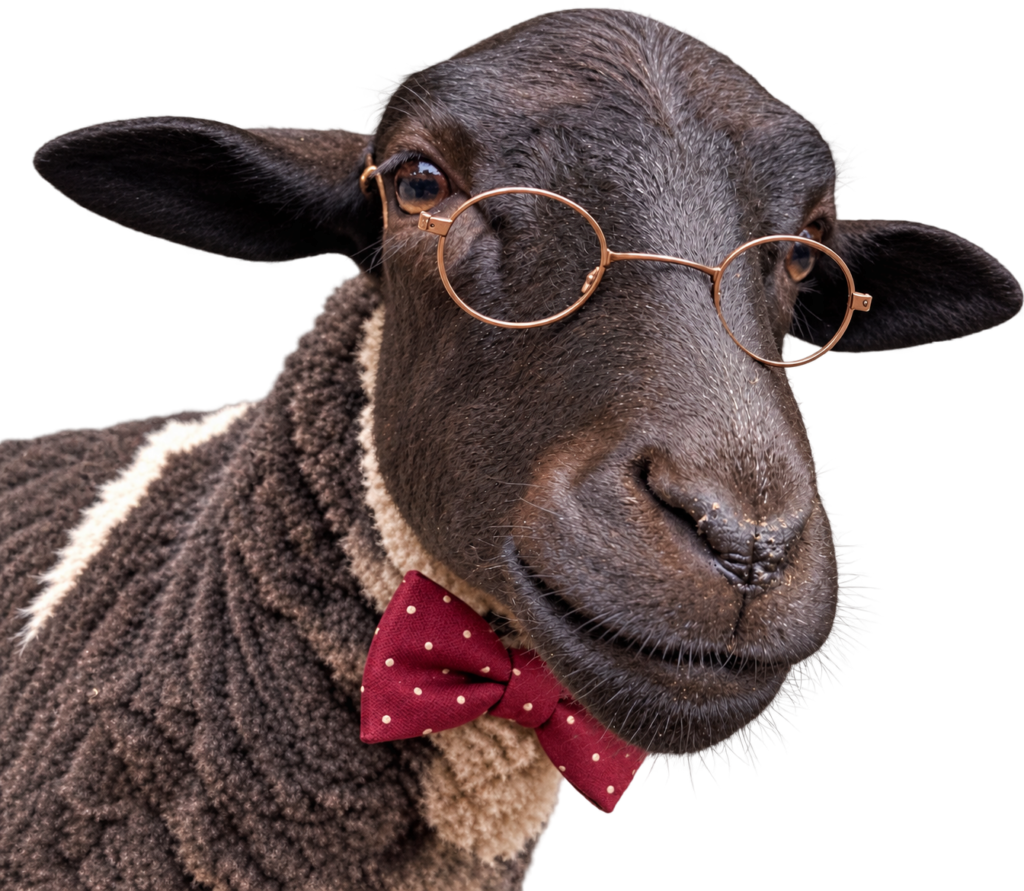
“Professor Sappho here. Lissen Up. It’s time to lern. Today, we lerning about Yarn and Fibers. The different types, and what dey are good for. You can trust me, because I da wool expert.”
What is yarn? Good question. I’m glad you asked. Yarn at its most basic is simply fibers aligned in a common direction and twisted together. The fibers can be practically anything. From wool fibers, hair, plant fibers, synthetic fibers, you name it. If you take a bunch of fibers, line them up and twist them, you create yarn.
But Professor, what EXACTLY is happening?
Not to get too far into the weeds, the reason why twisting fibers turns them into yarn is physics. When you twist fibers together, they wrap around one another and press against each other. This creates friction between the fibers, which prevents them from simply sliding past one another. The more contact between the fibers, the more friction resists sliding.
Add this up across the countless overlapping fibers and the loose bundle of fiber becomes a cohesive strand. Friction holds the fibers together into a piece of yarn. It’s why spinning works.
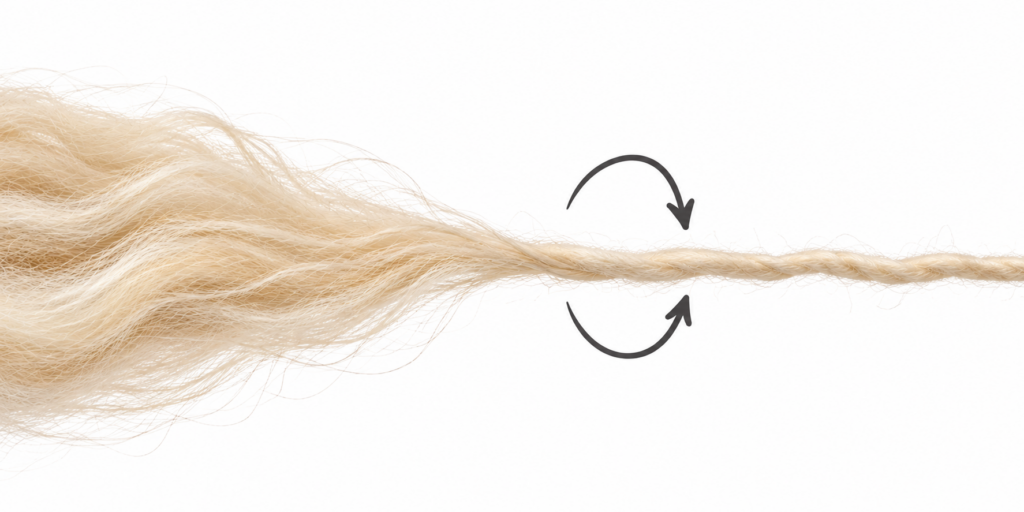
It’s all in the twist. The more you twist, the more tightly packed the fibers are, the more friction. Tightly twisted yarns are firmer. Less twist means less friction. The fibers stay a bit more mobile, a bit more open. This creates a loftier, softer, more flexible yarn. Too little twist and there isn’t enough friction to hold everything together. Under twisted yarns are weak and fall apart. Too much twist and yarns become wiry, dense. Extreme twist simply tears the fibers and reduces yarn strength.
How are the fibers collected? Well, for plants, you harvest the plant then process it. Cotton requires removing seeds from the fluff. Bamboo is a chemical process that removes lignin and leaves bamboo cellulose. And for wool? That involves shearing. Here you can see Baby Belle getting sheared. Shearing is stressful and is best left to professionals. They make it look easy. It’s not. Sheep are sheared once a year, usually in the spring so they don’t experience heat stress during the summer months.
Now that we know what yarn IS, and we touched on how fibers are collected, let’s talk about the different yarn types. We’re going to talk about yarn materials first, and then we will chat about yarn sizes. We’ll start with the one I think is the very best. Wool.
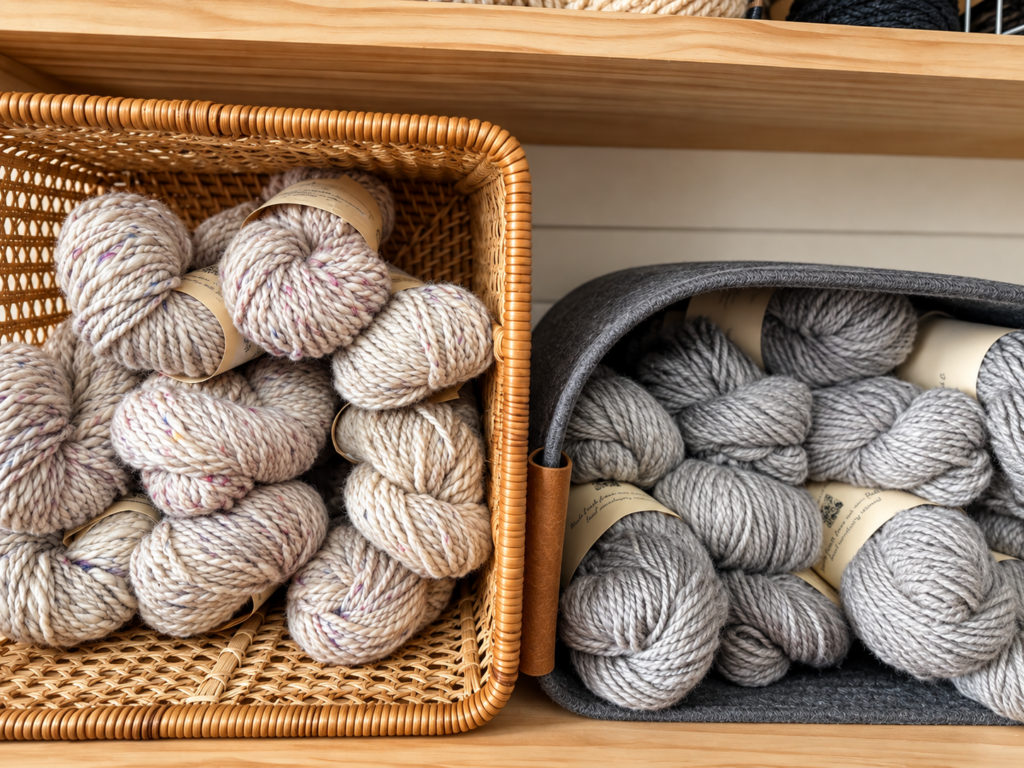
Wool! The perfect material from the perfect creatures. Sheep. Being a sheep I may be biased, but I think not. Anyway, there are lots of types of wool. Each type of sheep gives wool with different qualities. Just like how some people have dark hair, curly hair, straight hair, some sheep have wool that grows in tight curls, or loose curls, with hair, or without, coarse, fine, or in-between. The possibilies are as varied as the different types of sheep.
Regardless of the sheep it comes from, all wool is insulating. Wool retains heat even when it is wet. This is the reason why outdoorsy people prefer wool garments. It keeps you warm when other garment materials fail. And speaking of insulation, insulation works both ways. It keeps heat in, but can also keep heat out. Wool can be surprisingly cool in warmer temperatures. And since it wicks water, it keeps you dry when you sweat.
Now, there are downsides to wool. For one thing, pure wool has the tendency to shrink if you wash it in hot water or agitate it too much. This can be an issue if you spend a long time making a gift only to see it ruined because it got carelessly shucked into a laundry machine. That said, if you blend wool with a small percentage of polymide fibers, it becomes superwash wool. Superwash wools can be run through a washing machine and retain their shape. I don’t recommend scalding hot water, but cold water machine washes are acceptable. Further care information can be found in my lesson about Yarn Care.
There are an endless variety of wools. If you include wool blends, the variety is almost infinite. But, lets just focus on a few that you will certainly run into in a yarn store such as my Wool Werks.
Superwash Wool. We covered this one. This kind of wool has it’s fibers blended with synthetic fibers to enable it to survive a trip through a washing machine. It’s properties are almost completely the same as all natural wool because the percentage of synthetic fibers in the blend is fairly low. Around 15 to 20%.
Merino. Merino wool comes from Merino sheep. Merino sheep are medium sized, about 180 to 200 pounds on average. They are typically white and can live practically anywhere. The fibers of these sheep are extremely fine and very highly crimped. This means that when merino is spun, the resulting yarn is extremely soft and is not itchy. Merino is considered the finest and softest of all wools. So much so that the Kingdom of Spain–where merino sheep come from–made exporting merino sheep a crime punishable by death.
Babydoll. Babydoll sheep are not terribly common in the wool yarn trade, but since my flockmates Baby Belle and MomBaaaa are babydoll sheep, you will find babydoll wool at my yarn store. Babydoll fleece tends to be relatively short, but it is fine and very curly. The curls and small diameter of the wool fiber means babydoll wool yarn is soft to the touch. So much so, that babydoll is a wool that you can wear directly on the skin. It blends very easily which means you will find it in combination with angora, alpaca and other fibers. It does not felt well if wet felting. Needle felting works well however.
British Wool. British wool as you can imagine is wool that originates from the United Kingdom. There are 63 different breeds of sheep in the UK, so generalizations are very rough, but in terms of picking through yarn at a store, in general British wools tend to be strong, somewhat coarse. How coarse depends usually on where the sheep was raised. Sheep of Scottish or Northern Irish origin tend to be the coarsest. Scottish wool can be rather rough, but makes a very nice tweed. Think rugged outdoors. More southerly sheep tend to have finer fleece. But as a rule, British wool is fairly robust wool. There are exceptions, primarily any wool that comes from Blue Faced Leicester. While not as fine as Merino, it is still a fine, soft wool suitable for contact with skin.
Corriedale. A sheep cross between Merino and Leicester sheep. This sheep breed was developed in New Zealand, and as such this yarn is associated with that nation. The breed was however imported to the United States in the early 1900s and there is therefore a healthy amount of US Corriedale yarn. Corriedale is thicker than Merino and can be described as “rustic” where Merino is “refined.” It may or may not be itchy. That depends on how the yarn was spun and if it was blended. Still, Corriedale has a tendency to make beautiful cables in sweaters. It also felts very easily.
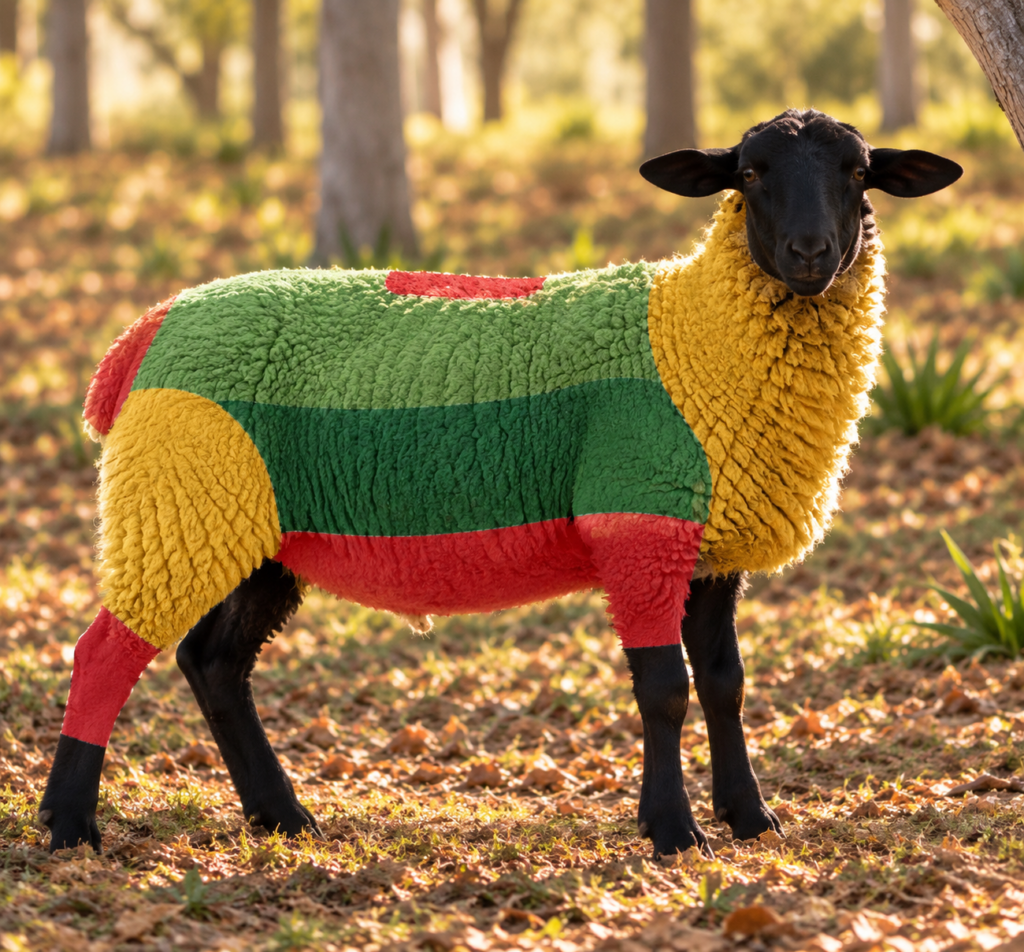
Speaking of wool, you might be interested in knowing what parts of the sheep’s fleece are useful and what parts are not. This image shows a sheep (one of our sheep in Chile) with parts of her body colored.
Greens are the best quality wool fibers. The shoulder area tends to be best. The back is usable except for the very back which is often damaged due to exposure to weather.
The neck and rear haunches tend to be longer stapled fiber which is good, but coarser and generally dirtier. These yellow areas are “medium quality.”
Lastly, the areas in red are the least useful for yarn making as these can be extremely dirty and contaminated with vegetation and fecal matter. Red areas also receive the most wear and tear from a sheep’s daily life. The wool from the top of the head or lower legs is not used.